


Many people who have been diagnosed with hypothyroidism and received the standard levothyroxine prescription often find themselves wondering if TSH levels can return to normal without medication. Often, this can be due to factors such as not seeing any improvement in lab work after taking levothyroxine or experiencing significant side effects and being told by endocrinologists that there is no other option to hypothyroidism management.
The most straightforward answer to the question of whether TSH levels can return to normal is that it depends on the underlying cause of the patient’s thyroid dysfunction, particularly if iodine plays a role.
Let’s pull back the curtain on one of the most common yet frequently overlooked factors that could be the cause of all your thyroid problems: iodine.
The Iodine Paradox: The Hidden Key to "Can Hypothyroidism Be Reversed Without Medication?"
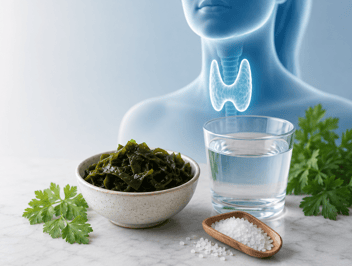
Iodine is essential for thyroid hormone production, which is why it’s added to many everyday items, such as iodized salt, cereals, and dairy products.
The vital role that iodine plays in thyroid hormone production could easily lead you to wrongly believe that increasing iodine intake leads to a healthier thyroid, but your thyroid operates on the Goldilocks principle: not too little, not too much, but just the right amount.
This brings us to the fascinating phenomenon called the Wolff-Chaikoff Effect. Your body uses mechanisms to try to halt hormone production when it is exposed to excess iodine to prevent hyperthyroidism. This effect is like an in-built circuit breaker in your body that shuts off hormone production as hormone levels approach unhealthy levels.
For many people, the Wolff-Chaikoff Effect is a transient state as the thyroid typically adjusts within 48 hours and resumes normal hormone production. It works as a temporary protective mechanism.
However, research shows that some people’s “circuit breaker” gets stuck in the “off” position with continued exposure to iodine. This can lead to a prolonged or permanent state of hypothyroidism triggered by excessive iodine consumption. The real kicker about the Wolff-Chaikoff effect is that the iodine level that triggers it doesn’t have to be shockingly high. What seems like a balanced, healthy diet could be overloading your body with iodine when you sit down with a dietitian and assess your total iodine intake.
One study highlighted that consuming just 250 mcg of iodine daily, an amount significantly below several over-the-counter supplements, was enough to induce or worsen hypothyroidism in susceptible populations. Notably, this built up iodine in the study participants' system as compared to the idea of iodine excess as a sudden overflow, such as from contrast dye during imaging studies. And also notable is that the study authors noted a reversal in several of the participants' hypothyroidism status simply by having the participants stop taking the supplement.
To put things in perspective, the Recommended Dietary Allowance (RDA) for iodine is 150 mcg/day for adults who are not pregnant or lactating. With that in mind, it’s easy to see how someone looking to be healthier by taking a supplement could accidentally overload their system with iodine.
Navigating the Iodine U-Curve: Why Your Needs Are Unique
The Goldilocks relationship between your thyroid gland and iodine creates what scientists call a “U-curve” relationship between thyroid health and iodine. You face risks on both sides since deficiency and excess both have adverse effects on your health.
The sweet spot where you’re consuming the amount of iodine that’s “just right” is different for everyone and changes over time. That’s one of the reasons why the one-size-fits-all approach of prescribing levothyroxine doesn’t work for many people.
Factors that can increase your sensitivity to iodine include:
- Your current diet: A diet high in goitrogens (such as raw cruciferous vegetables like broccoli, cauliflower, cabbage, kale, and Brussels sprouts) might alter your thyroid's ability to process iodine. The type of iodine you eat, the time of day, and the other foods you eat with iodine-rich food can also affect absorption and utilization. For example, your body will process the iodine in salt fortified with potassium iodide differently from the natural iodine forms present in wild-caught fish. Your body might also absorb iodine differently if you eat iodine-rich foods with a large high-phytate meal such as non-sprouted legumes versus eating iodine-rich foods as a solo item.
- Selenium status: Selenium plays a vital role in the conversion of T4 to the active T3 hormone and in protecting the thyroid gland. Selenium deficiencies can make you more sensitive to iodine deficiency or excess.
- Underlying autoimmune conditions: If you have Hashimoto's thyroiditis, which causes your immune system to attack your thyroid, monitoring iodine intake becomes more crucial. Too much can overstimulate your already-stressed thyroid gland, intensifying the autoimmune response and worsening your symptoms.
Consuming the right amount of iodine could be the key to answering "yes" to the question, "Can hypothyroidism be reversed without medication?" in your specific case.
What's the Game Plan? How to Investigate Your Iodine Status
The first step toward returning your TSH levels to normal without medication is to talk to a healthcare professional about testing iodine levels in your urine or blood and working with a dietitian to assess your daily intake. You need data to understand the underlying cause of your thyroid dysfunction.
A simple urinary iodine test can give insight into your body’s iodine levels. However, it’s essential to recognize that these tests were intended for large-scale public health purposes and, at the individual level, will only give part of the picture.
You might be consuming a slightly more than adequate level of iodine, which has been shown in public health studies to be still associated with hypothyroidism. However, based on your personal level of iodine sensitivity, this might be a significant amount of iodine for your current state. Vincci Tsui, RD, in our course on iodine intake and the thyroid, recommends assessing iodine intake by calculating it from your diet with your dietitian's help. This objective data, combined with your TSH, T3, and T4 levels, provides a much clearer picture of what’s really going on. It can help determine if your hypothyroidism is an iodine deficiency or an excess problem in disguise.
Your Path to a Potential Solution: It's Not One-Size-Fits-All
Finding that perfect spot on the iodine U-curve is the goal, but it requires a lot more than following some generic “thyroid diet” you find online. It requires a personalized approach after testing to determine your current iodine and hormone levels. You want a diet plan tailored to your unique biochemistry, lifestyle, and test results.
This is where the standard approach for treating thyroid disorders, particularly in the U.S., falls short. Many physicians are trained to address abnormal lab values with medication, which can be a vital, life-saving approach for many patients, but they often lack the time or training to delve into nuanced nutritional recommendations tailored to each patient’s biochemistry.
We created our course, Are You Consuming Too Much Iodine? Excess Intake & Thyroid Disorders to address such care gaps and provide a more holistic understanding of how minerals like iodine and selenium interact with the body. This course is intended as a starting point to give patients the tools to begin self-advocating for better, individualized thyroid care from their medical team.
The course will help you:
- Understand related research on the U-curve of benefit for iodine and thyroid disorders.
- Identify hidden sources of iodine in your diet and supplements.
- Learn how to strategically adjust your intake to find your personal "sweet spot."
- Support your thyroid with a comprehensive dietary strategy.
Stay Informed with Expert Insights
We are constantly working on new courses to help you keep up with the fast-evolving field of thyroid research. We are currently collaborating with South American physicians, who bring a different perspective to thyroid health.
On average, South American medical training provides a more holistic and detailed understanding of how minerals like iodine and selenium interact with the body, as their cultures place a greater emphasis on public health and the role nutrition plays. Sign up for our newsletter to receive updates on new courses.