

If you’re searching for a diet that prioritizes thyroid health, you’ve probably noticed almost every article published online frames your thyroid condition as a weight problem and then sells you a meal plan, a supplement, or a list of forbidden foods.
That framing is scientifically lazy, and it may be making you sicker.
Some people learn this lesson the hard way after years of battling symptoms like fatigue, brain fog, cold intolerance, and stubborn scale numbers. They assume the answer to their health issues lies in finding the perfect diet for weight loss designed for people with thyroid dysfunction.
They might try restrictive eating, cut out entire food groups, buy pricey “thyroid support” blends, and still feel miserable. Then a clinician might finally test their iodine status, discover they are consuming way too much iodine, and help them identify the hidden sources of iodine that were wreaking havoc on their system.
In my own experience, within weeks of reducing my dietary iodine intake gradually when I was eating more than 250 mcg/day on average, my metabolism improved, my mood was elevated, my heart rate normalized, and the bloating and constipation eased. The recommended daily allowance (RDA) for iodine intake by the NIH is 150 mcg/day for non-lactating or pregnant adults. Every person is different and their needs may differ for iodine intake. For example, the NIH has also noted that having Hashimoto’s can make a person more sensitive to iodine excess.
China has had an interesting series of public health studies. First, the country faced iodine deficiency in the late 20th century then a higher rate of hypothyroidism and autoimmune thyroiditis associated with excess and even more-than-adequate iodine intake as compared to the slightly deficient iodine intake tier as illustrated in study by Teng et al. (2006). Later, a 2021 follow-up to the original Teng research documented what happened in China as iodine intake transitioned from more than adequate toward adequate levels between 2009 and 2015. As median urinary iodine fell from approximately 220 to 176 micrograms per liter, rates of hyperthyroidism, Graves' disease, and goiter all decreased significantly, while hypothyroidism and autoimmune thyroid disease prevalence remained stable. The lower boundary of the population TSH distribution shifted upward, reflecting improved thyroid function as iodine moved toward the optimal range. These population-level findings are consistent with what patients report individually when they identify and reduce hidden iodine sources that were pushing their intake above the adequate threshold.
In my case, with careful iodine reduction of 60 mcg per month in my daily intake, moving down from a starting point of 250 mcg/day in intake, the uncomfortable water weight came off with the most plausible mechanism being because my body was regulating hormones, such as antidiuretic hormone (ADH), more effectively. ADH is made in the hypothalamus and released through the pituitary, which works closely with the thyroid in the body’s hormonal feedback systems. In an older Japanese study, participants had similar experiences when cutting back on a high-iodine diet due to factors such as overconsumption of seaweed and seeing their hypothyroidism improve in weeks.
As a coastal nation with a population that eats high amounts of seafood and seaweed, Japan has led studies for decades that show that the prevalence of thyroiditis and hypothyroidism is associated with chronic excess iodine intake. Note that chronic excess is very different from the idea many US clinicians have that thyroid issues due to excess iodine typically occur only after a sudden high intake of iodine.
Overall, the ideal diet for thyroid health has very little to do with calorie counting. Instead, it’s all about restoring whole-body regulation.
What Is a Thyroid Health Diet Really Supposed to Do?
A diet that promotes proper thyroid health focuses on restoring the micronutrients your thyroid gland and hormonal pathways need to operate optimally, while eliminating substances that interfere with their function. However, it is important to note that what is optimal may differ for each person’s situation and individual dietary needs, even though there are general recommended ranges that clinicians can use.
Thyroid hormones influence nearly every system in your body: your heart and blood vessels (cardiovascular), digestion (gastrointestinal), skin (integumentary), brain function (cognition), temperature regulation (thermoregulation), and pain perception (nociception).
Thyroid Dysfunction and Weight Shifts
Thyroid dysfunction can cause weight fluctuation, but it’s usually a symptom that shows up at the tail end and can be more related to shifts in water weight. Notably, these shifts in water weight can also affect your electrolyte levels, which can be much more concerning and require closer monitoring than weight alone.
In fact, low sodium (or hyponatremia) can occur in hypothyroid patients, at times, due to poor regulation of the body’s antidiuretic hormones. While any heart symptoms should be checked out, I personally have experienced more palpitations when my sodium is likely low, and my sleep is disrupted from constantly waking up to pee off what feels like gallons of fluid. Personally, I have seen how quickly my hormonal regulation can improve from day to day as I navigate dietary iodine intake and my thyroid-stimulating hormone (TSH) fluctuates.
Treating hypothyroidism as a cosmetic issue misses the reality that only about five to ten pounds of weight gain can be directly attributed to thyroid dysfunction in most people. The rest can be attributed to the cascading effect of appetite dysregulation, energy crashes, and mood- and deficiency-driven eating that can’t be addressed with generic meal plans.
The Problem with an Underactive Thyroid Diet Focused on Weight Loss
A diet for an underactive thyroid that’s built around calorie restriction often backfires. When you slash calories without addressing why your metabolism is sluggish, you risk worsening nutrient deficiencies that commonly afflict patients with thyroid dysfunction.
Iron deficiency can be common among people with thyroid issues and may coexist with or contribute to thyroid dysfunction through several mechanisms. The thyroid gland requires iron to produce the enzyme thyroid peroxidase, which is essential to hormone synthesis. Additionally, thyroid hormones stimulate the expression of key transporter proteins in the small intestine that are necessary for non-heme iron absorption, meaning that when thyroid function is impaired, the body's ability to absorb plant-based iron sources like lentils, spinach, and fortified grains is compromised. This does not apply equally to heme iron from animal sources, which uses a different absorption pathway, though other factors including hepcidin levels can affect iron availability regardless of source. For patients who rely primarily on plant-based iron because of food sensitivities or dietary preference, this distinction matters considerably. If you simply eat less without addressing the thyroid dysfunction driving the absorption problem, you are likely to become more deficient in iron and other key nutrients, worsening symptoms like hair loss, skin and nail dryness, mood changes, and fatigue without understanding why.
Examples of macronutrients would be carbohydrates, proteins, and fats. These are nutrients required in large amounts to provide energy. Micronutrients include vitamins and minerals. These nutrients are required in smaller amounts to support essential processes like immune function and metabolism. Both are crucial for health, but have different functions and requirements. Many US dietitians, and the dietetics software they use for meal planning, focus heavily on macronutrients.
A clinically informed dietary approach for hypothyroidism is one that begins with a comprehensive workup measuring the micronutrients that directly affect thyroid function, including iodine status, selenium, ferritin, vitamin D, and zinc. In standard US primary care, thyroid assessment is frequently limited to TSH alone, and many patients report never having had a Free T4 ordered, let alone a micronutrient panel. The markers listed here are not a description of what is currently standard in US thyroid care. They are what a genuinely comprehensive workup should include, and the gap between these two things is one of the most consistent patterns reported by the patients who find this platform.
I have watched patients dutifully follow generic advice they found online or received from clinicians focused only on macronutrients, only to unknowingly become more deficient because no one checked for the underlying nutritional gaps driving their symptoms in the first place.
For example, I once sought help from a US dietitian to address my B12, iron, and D3 deficiencies while being cautious about my iodine intake. She kept pushing me to eat cottage cheese for protein, a food that is comparatively high in iodine and fairly low in necessary vitamins. I pushed back and informed her that this was a high-iodine food. She expressed surprise, as she was unaware of the iodine content of foods, according to her.
I questioned why she was so focused on assigning me a diet with a goal of above 90 mg of protein per day rather than addressing my request to focus on the micronutrient deficiencies that were causing nerve pain and poor wound healing. She explained that protein was key to healing. I had to explain to her that iron and B12 were also important for healing as they improved blood quality, which is important for delivering oxygen to wound sites. Additionally, I was already eating a very high-plant-protein diet, along with eggs and chicken breasts, among the few foods I could eat at the time.
You can use this calculator to calculate average protein needs based on gender, age, weight, height, and level of activity. I had to take my dietary plans into my own hands, carefully measuring out foods and looking up normal ranges of micronutrients. In the meantime, the dietitian googled “what’s good for the spinal cord” and sent me her googled response of blueberries and kale, among other foods.
I had to learn from friends and in Spanish-English language exchanges with South Americans that Vitamin C, combined with non-heme (typically plant-based) iron, increases the bioavailability of non-heme iron, and then research Vitamin C sources I could eat and how to eat them in combination with non-heme for strategic food pairing.
My dietitian, for her part, continued to encourage me to eat cottage cheese with a “just try a little.” I pushed back and continued slowly reducing my iodine intake to normal levels, and was so excited that I had finally regained my appetite and was losing a few pounds of water weight, and then received the updated bloodwork results that showed me that my hypothyroidism had reduced drastically within a matter of weeks.
I cried with my family in celebration and relief as my primary care physician and endocrinologist had told me there was no hope for me if I could not tolerate levothyroxine, telling me that my hypothyroidism would worsen until my body would eventually fail. Yet here, I had figured out the problem and resolved the issue.
The dietitian failed to celebrate my win, instead accusing me of having an eating disorder, as I had been recovering from being underweight from the severe nausea and difficulty raising my head to eat that had accompanied the early stages of my spinal CSF leak. I fired the dietitian for her incompetence and for her negative impact on my level of self-motivation, recognizing her as harmful to my mental health.
Why the Best Diet for Hypothyroidism Isn’t a One-Size-Fits-All Meal Plan
Here’s a hard truth most US dietitians won’t tell you: their training and the software tools they use are built around macronutrients (protein, carbs, fat), but thyroid function can be affected by s micronutrient levels, the vitamins and minerals that most US dietary plans ignore. It is worth noting that thyroid function depends on multiple intersecting factors including autoimmunity, genetics, inflammation, medications, nutritional status, hormonal changes, age, iodine exposure history, and treatment status. Micronutrients are a critical and frequently overlooked piece of this picture, but they do not explain every presentation and addressing them works best as part of a comprehensive clinical assessment rather than as a standalone intervention.
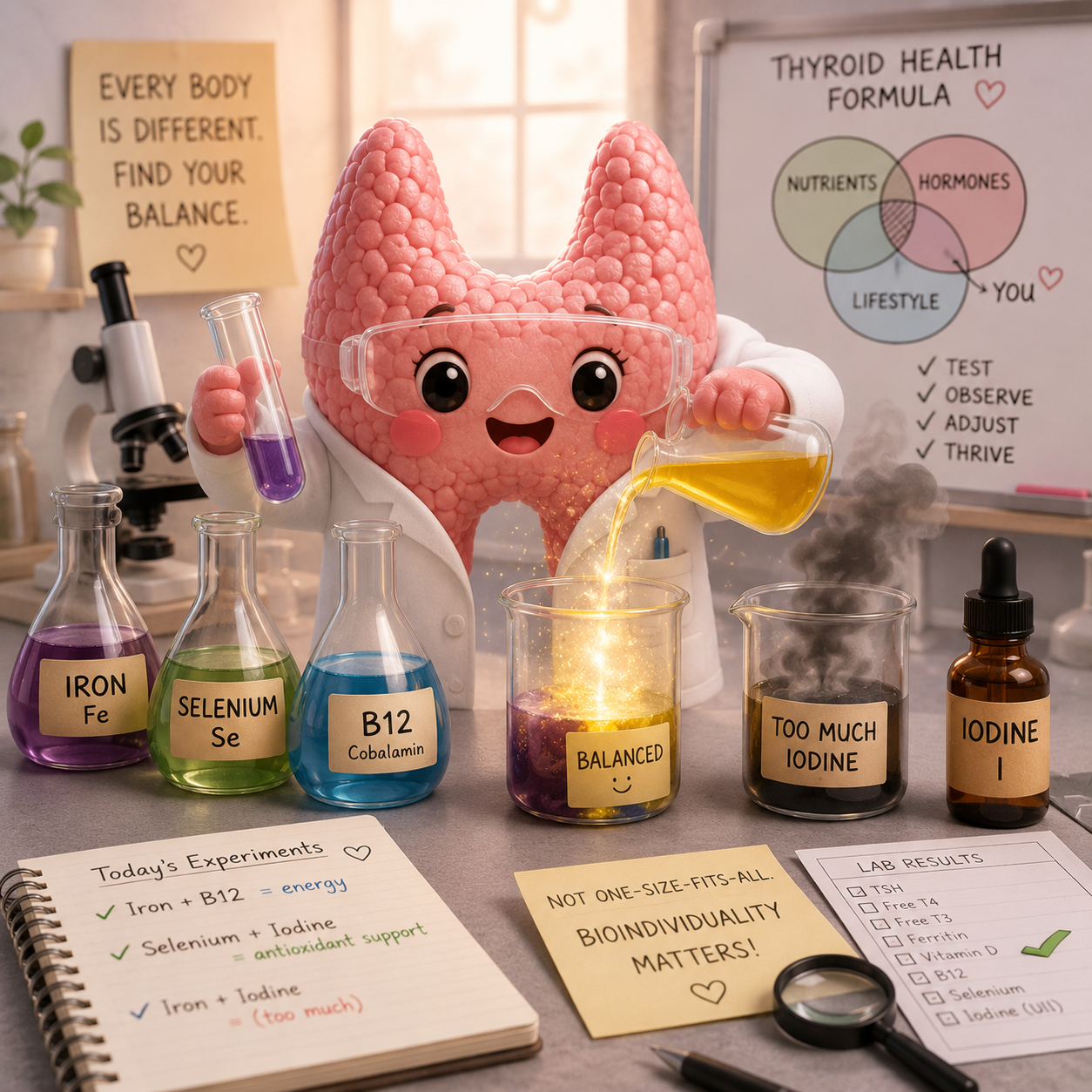
Iodine, selenium, iron, zinc, and B12 can play relevant roles in thyroid physiology and related metabolic pathways, keeping your thyroid gland functioning optimally. Selenium converts T4 into the active T3 hormone; without enough, you can have normal labs and still feel hypothyroid.
Yet many US dietitians admit they aren’t comfortable providing micronutrient counseling. So when you ask for a Hashimoto’s diet plan, you often get a high-protein, gluten-free template that never addresses your selenium, iron, or iodine status.
I have good news and bad news for you if you’ve been searching for the best diet for Hashimoto’s weight loss. The good news is that correcting micronutrient gaps often leads to weight loss naturally. The bad news is there’s no magic food combination that burns fat without first fixing the underlying thyroid dysfunction.
Thyroid Foods to Avoid: The Goitrogen Myth That Keeps You Stuck
The conversation about foods to avoid for healthy thyroid function usually starts and ends with cruciferous vegetables, such as broccoli, kale, and cabbage, because they contain goitrogens that can interfere with iodine uptake.
The right question isn’t “Are goitrogens bad?” It’s “What is my iodine level and where do I sit on the U-curve?” Both iodine deficiency and iodine excess suppress thyroid function, and the sweet spot is narrower than most realize.
Whether you should avoid them depends entirely on your individual iodine status, which is rarely tested. Canadian dietitian Vincci Tsui in our course on how iodine impacts the thyroid recommends a dietary iodine intake assessment as more effective than a blood or urine iodine test.
Urine tests have typically been used for large population health studies as an assessment easier to perform en masse. Looking at the individual’s history of thyroid hormone levels and historical dietary and supplementary (if applicable) iodine intake can give much more information on what the individual needs in dietary iodine intake, as compared to urinary levels, which can fluctuate based on how much water you drink and are simply compared to a general population norm.
If you have iodine excess (more common in the US than you’d think, thanks to hidden sources like commercial bread, dairy, eggs, and seaweed snacks), those same vegetables may actually help by moderating iodine absorption.
I’ve seen patients with multiple food sensitivities strip kale or broccoli from their plates because of a generic “avoid this for thyroid health” article, only to crash their vitamin C and K intake and ask me later if I have any idea why they have to wear adult diapers during their periods because they are bleeding so much. Neither their physicians nor their dietitians ever considered a Vitamin K deficiency.
Weight Loss Supplements for Hypothyroidism: Why Quick Fixes Don’t Solve Anything
The internet is awash with weight loss supplements for hypothyroidism that promise to “support” your thyroid with bovine glandular extracts, guggulsterones, or kelp-based iodine blasts.
The uncomfortable reality is that if your thyroid dysfunction is caused by iodine excess, adding more iodine to your system can trigger the Wolff-Chaikoff effect, which is when your thyroid temporarily shuts down hormone production to protect itself.
There is also a known sustained effect of hypothyroidism in response to iodine excess. While the Wolff-Chaikoff effect is specific to a temporary response to iodine excess, there is no specific name for the sustained version of this effect, even though the sustained version is well-documented internationally, from Japanese research on chronic excess intake from high-iodine diets to Chinese, Colombian, and Spanish studies (among other countries) on chronic excess iodine intake after populations started eating iodized salt.
Supplement companies don’t typically know your labs. They don’t know if you’re iron-deficient, selenium-deficient, or iodine-toxic. The best supplement for you might be none at all, but rather the removal of hidden iodine sources and a nutrient-dense diet built around the results of a proper thyroid workup, guided by a qualified clinician.
A Thyroid Diet Plan That Starts with Testing, Not Restriction
An effective thyroid diet plan doesn’t start with a list of forbidden foods. It begins with a partnership between you and a clinician who understands micronutrient metabolism, and not just macronutrients, along with regular lab testing.
Start by requesting a ferritin and a full iron panel. Track how your TSH, Free T3, and Free T4 respond as you adjust your intake. Keep in mind your gender and the hormonal and cyclical changes in iron levels and needs.
For example, the recommended daily intake of iron for women aged 19-50 in the US is 18 mg, and then 8 mg after age 50, and 8 mg for men of all ages. For women, these needs change if you are lactating or pregnant.
The reason why the recommendation for women drops off after the estimated age of menopause is due to your cycle stopping. The menstrual cycle phase can heavily impact your thyroid-stimulating hormone (TSH) levels, where high TSH levels are often part of the picture of hypothyroidism among low or normal T4 levels.
Research indicates that TSH often rises during ovulation (mid-cycle) due to increased estrogen levels and that TSH is lower during the menstrual bleeding phase. It is also important to note that your iron levels themselves are affected by your menstrual cycle, and if you are borderline insufficient or fully deficient, drops in iron can be more acute with no buffer, stripping your body of the resources needed for proper thyroid hormone production.
If you’re in the iodine sweet spot, cruciferous vegetables could be good for you. If you’re low on selenium, foods like Brazil nuts and fish can make a real difference. If your ferritin levels are abysmal, addressing iron deficiency through diet and, if needed, targeted supplementation might resolve cravings and fatigue without a weight-loss script.
An optimal thyroid diet is personalized, root-cause-oriented, and free of expensive pills or supposed cure-all supplements.
The Best Diet for Hypothyroidism? The One That Asks What’s Wrong First
Subscribe to our free patient newsletter for ongoing coverage of thyroid nutrition, iodine metabolism, and what the research actually shows about getting well.
Disclaimer: This content reflects patient experience research and healthcare systems analysis. Nothing here constitutes medical advice. Please consult with a healthcare provider before making any changes to your current diet or treatment plan.