


If you've scrolled through South African dietitian threads on Reddit lately, you've seen the same question pop up again and again: Should I pack up and move to the UK?
I get it. You trained to help people eat their way to better health. Then your shift hands you a malnourished child, an empty supplement cupboard, and a clinic scale that last worked sometime around the 2010 World Cup. You improvise brilliantly. Sometimes it still isn't enough, and watching patients slip away because resources never arrived wears down even the toughest morale.
But here's what most of those threads miss. You don't have to choose between staying and leaving. A third option exists, and it starts with your laptop.
Why the South African Healthcare System Tests Your Morale
The South African healthcare system runs on two tracks. Statistics South Africa's General Household Survey found that only 16.4 percent of South Africans had medical aid in 2018. Everyone else relies on South Africa's public healthcare, where demand routinely outruns supply.
South African private healthcare can feel like a different country, with well-stocked hospitals serving the minority who can pay. The government's fix, the National Health Insurance (NHI) Act, became law when President Cyril Ramaphosa signed it in May 2024. South Africa's national health insurance will take years to roll out, though, and your patients need help now.
Dietitians feel the gap from day one. Since 2002, newly qualified dietitians have completed a compulsory year of community service in the public sector, just like South African community service doctors. In a 2009 cohort study, dietitians named limited resources their most common challenge, citing shortages of nutritional supplements, scales, computers, and even desks.
Following South African Doctors Moving to the UK? Read This First
Many South African doctors have already moved to the UK, and the brain drain of South African doctors and allied health workers keeps making headlines. The UK route works. It's not a weekend errand.
To call yourself a dietitian in the UK, you need registration with the Health and Care Professions Council (HCPC). The British Dietetic Association says international applicants must show they meet HCPC standards of proficiency, submit certified documents, and prove English proficiency if English isn't their first language. Most also need a Health and Care Worker visa, which usually lasts five years.
Then comes the part no form covers. You leave family, friends, and a community that may need you most. And the patients you left behind? They still don't have supplements.
The Third Option: Telehealth From South Africa to the World
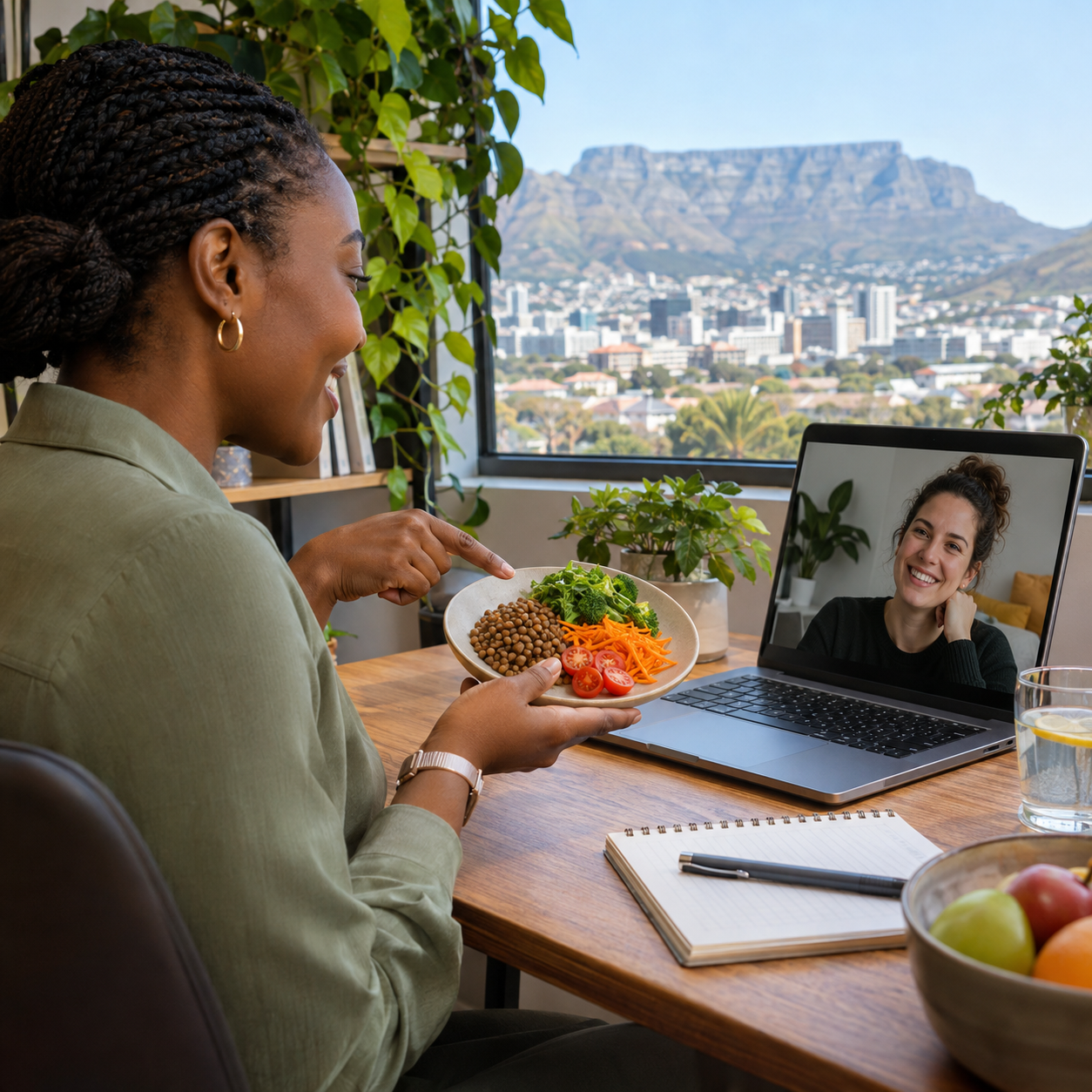
Here's the option nobody on Reddit mentioned: Keep your local work and add international virtual clients on top.
Telemedicine in South Africa has come a long way. The Health Professions Council of South Africa (HPCSA) updated its telehealth guidelines to allow remote patient management. So telehealth in South Africa already gives you a footing for virtual care at home. Keep in mind that the legality of providing clinical services depends on the recipient’s location, not just the provider’s.
For professionals already operating in the wellness space, such as South Africa’s unique approach to day-to-day support via wellness counselors who operate on a gradient scale of training, cross-border services can be even more appealing and legally defensible as wellness rather than clinical services. Likewise, dietitians can explore roles such as nutrition coach or educator, which are not regulated terms in many US states.
Note: Make sure to check with a healthcare lawyer familiar with the regions you would like to target to confirm the legality of all services and to better understand what scope you can provide.
Clients in better-resourced countries still need what you offer: diabetes education, weight management, gut health support, and meal plans for toddlers. With international virtual work, you can:
- Keep your public sector post or community clinic hours
- Add evening or weekend sessions paid in stronger currencies
- Fill gaps for clients who want specialist nutrition support
- Grow your income without uprooting your family
- Earn in USD if you target the US
One caution: Protected titles and licensing rules depend on where your client lives. In the UK, for example, the HCPC reserves the title "dietitian" for registrants, so check local rules and describe your services accordingly. Patients already cross borders for care, and our look at the global virtual care market shows what that means for clinicians like you.
Your Experience in Low-Resource Settings Is a Selling Point
Here's the interesting thing about South African medical training vs US or UK programs: You learned to do more with less. The same resourcefulness South African doctors are known for in low-resource settings becomes practical, budget-friendly advice clients anywhere can use.
You may have counseled patients living with human immunodeficiency virus (HIV) or tuberculosis (TB), managed severe malnutrition, and explained meal plans in more than one language. Multilingual South African clinicians bring the kind of cultural range that helps you connect with clients from many backgrounds. Put simply, your clinical skills travel well internationally, even if your luggage never has to.
Curious how clinicians from other developing health systems stand out? Read why South America has the clinical talent the US healthcare market is running out of, then see our South African dietitian vs US dietitian comparison.
How to Start Offering Telemedicine Services From South Africa
You don't need to quit anything to test this. Start here:
- Pick a niche. Choose what you already do well, such as diabetes, renal nutrition, or pediatric feeding.
- Check the rules where your clients live. Confirm which titles you can use, which scope of services you can provide, and whether you need local registration.
- Set up the basics. Use secure video software, clear intake forms, and a payment platform that accepts international cards.
- Market yourself abroad. Our guide on attracting US clients as an international clinician walks you through it, even without a website to start.
- Start small. Block off three or four hours a week, then grow as referrals come in.
You can keep serving the community that trained you and still build the career you want. Ready to grow your virtual practice? Book a free intro call with me to learn more.